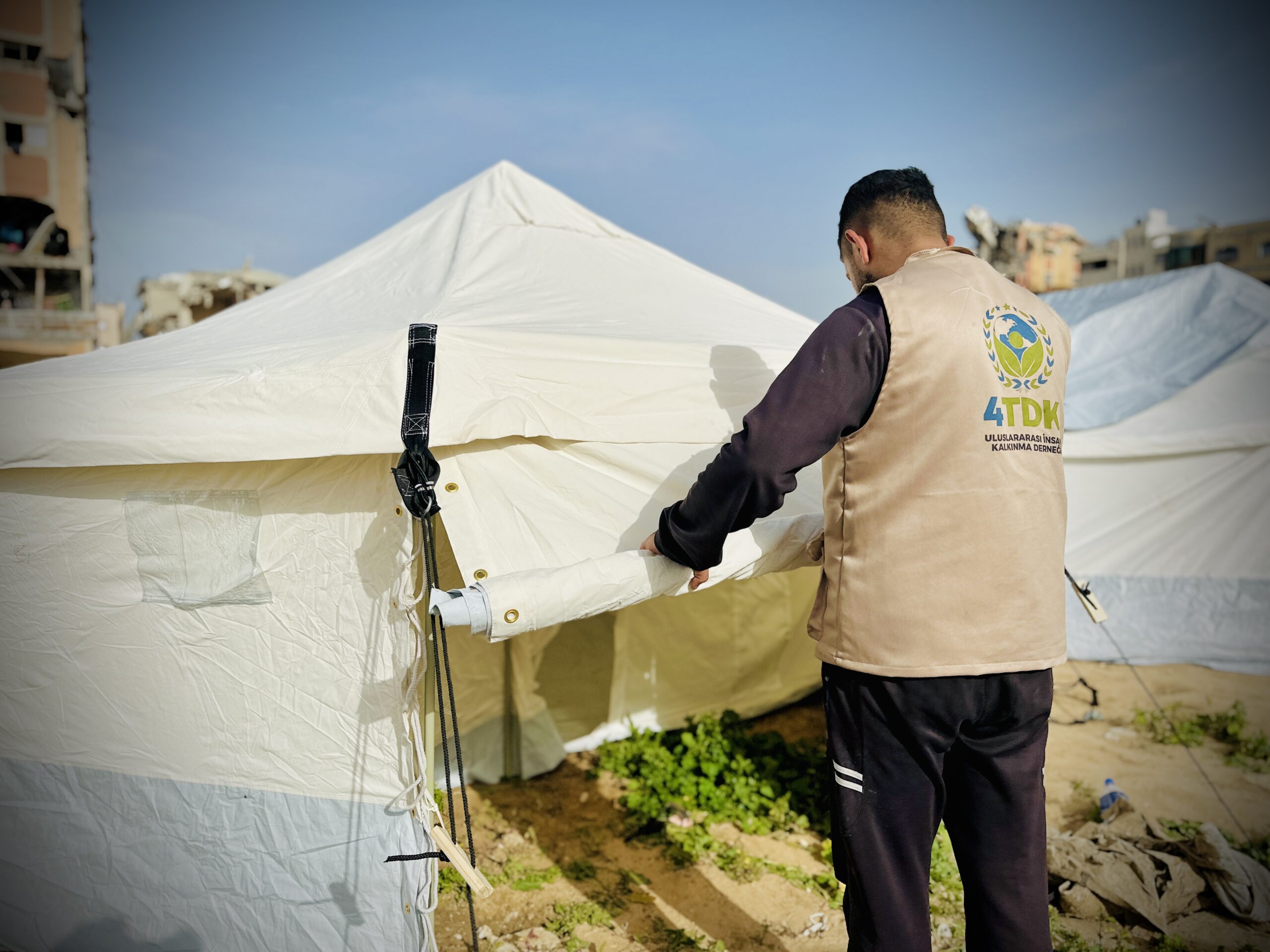
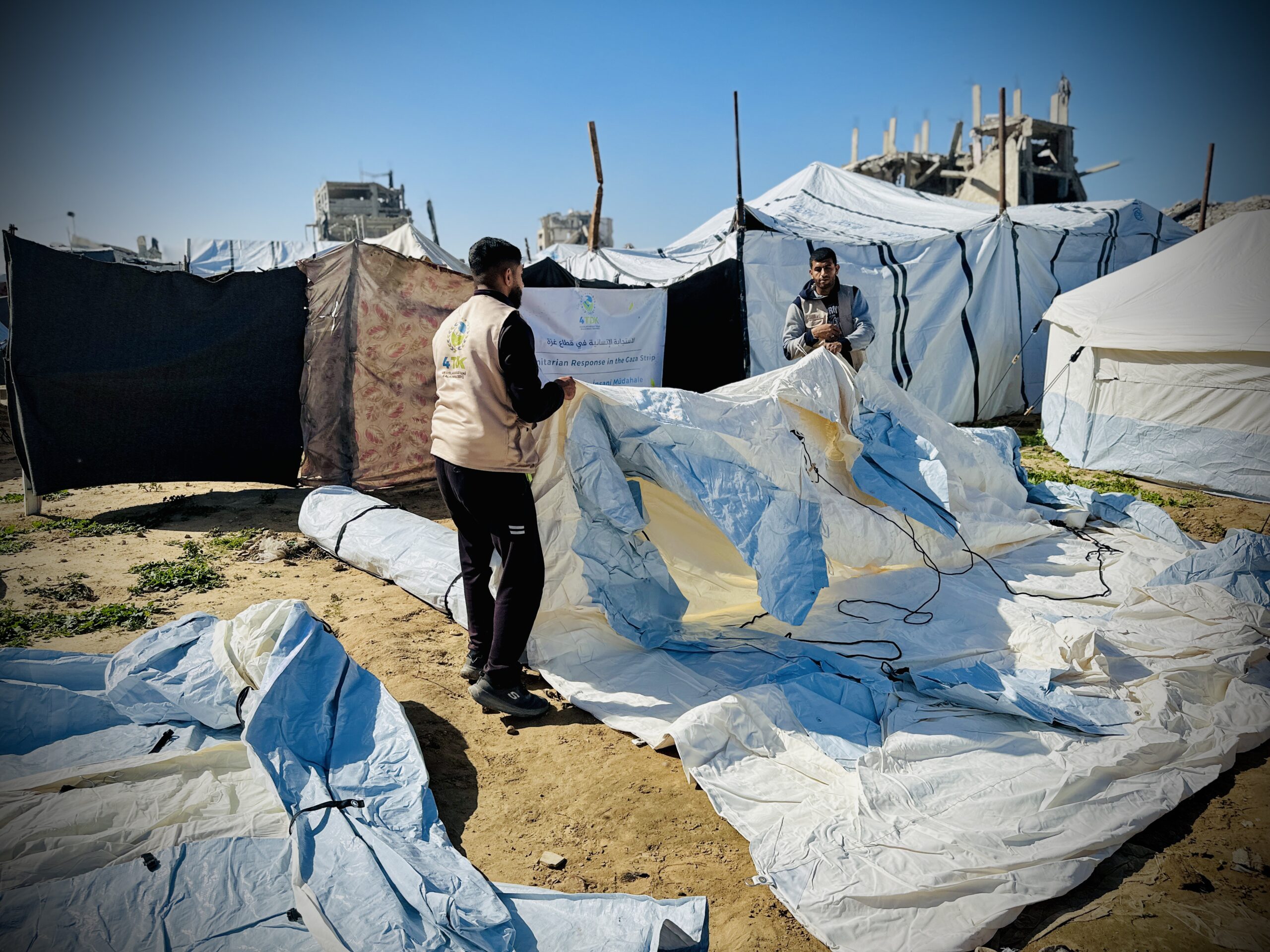
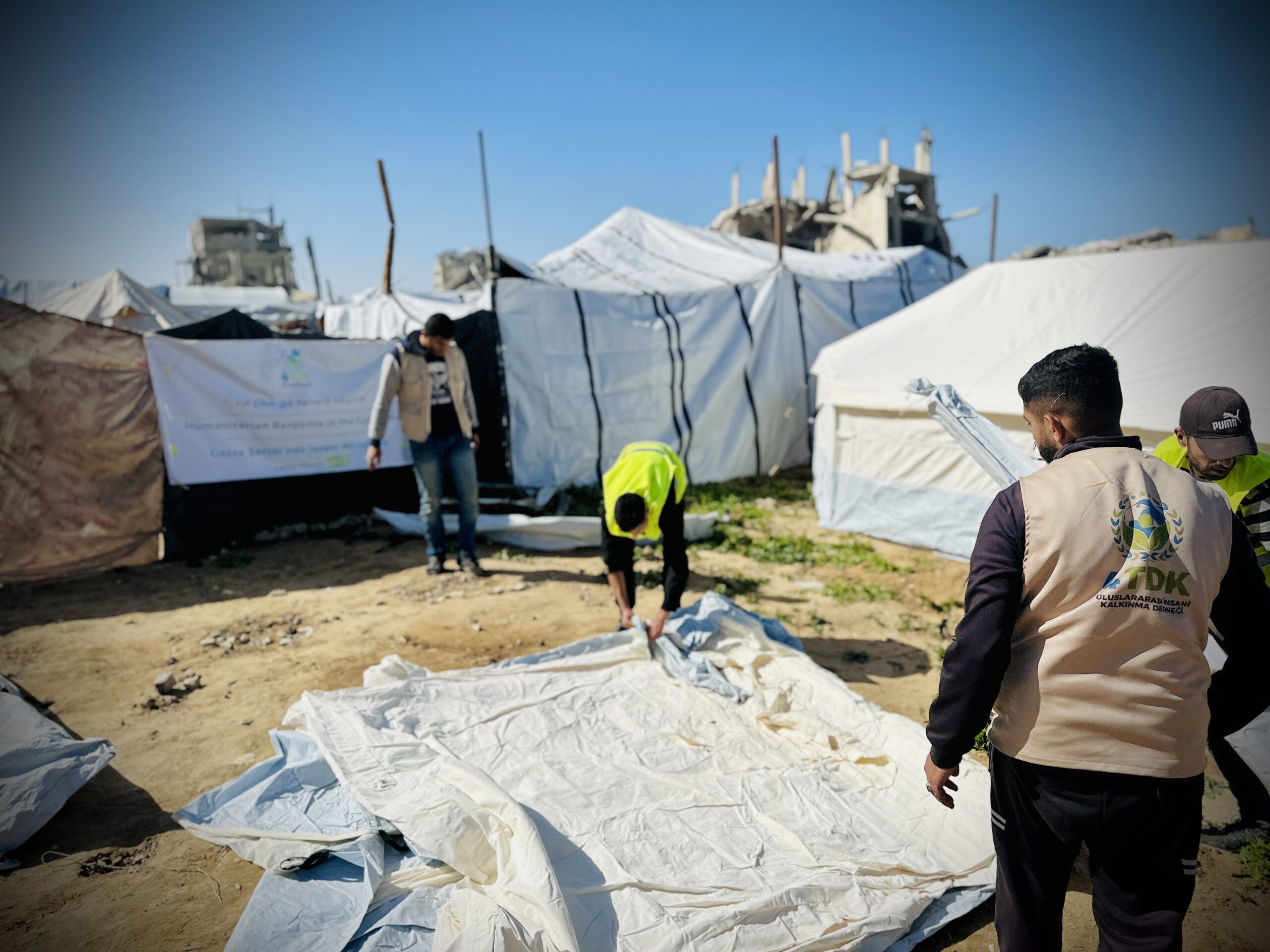
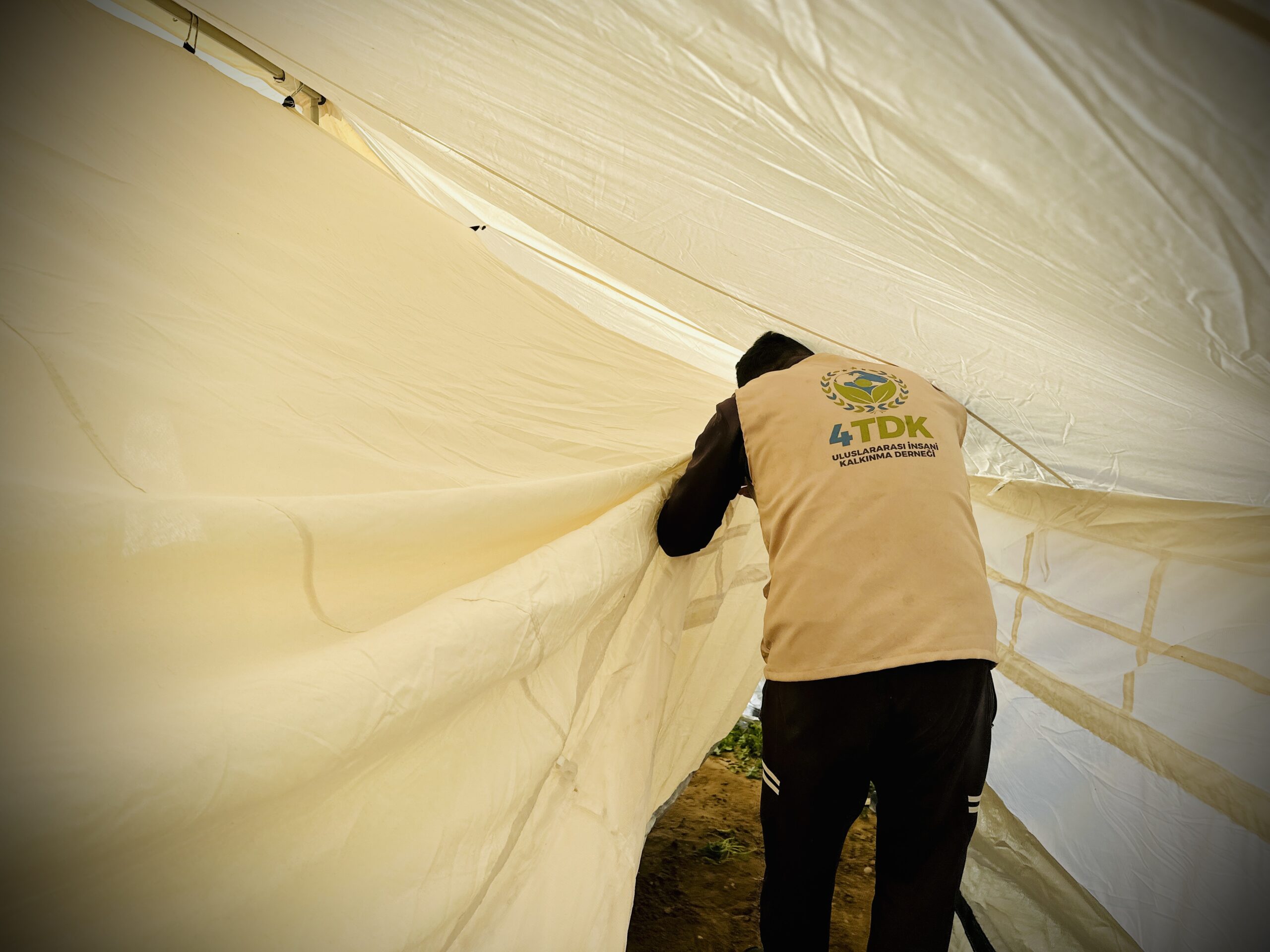
The response includes the supply and installation of weather-resistant tents designed to withstand harsh environmental conditions, while ensuring safety, privacy, and cultural appropriateness. In addition, essential non-food items are often distributed alongside shelter support to enable families to settle into these temporary spaces with greater stability.
Field teams are actively conducting needs assessments to identify the most vulnerable households—particularly those who have experienced total housing loss—in order to prioritize assistance and ensure equitable distribution. Installation processes are carried out rapidly and in an organized manner to minimize exposure to risk and respond effectively to urgent needs.
While these shelters are temporary in nature, their impact is immediate and critical. Beyond providing physical protection, they help restore a sense of safety, dignity, and stability for affected families. These projects represent a vital first step within a broader humanitarian response, pending the development of more durable and sustainable housing solutions.